
Celebrity
Eddie Cantor: Banjo Eyes, the Radio Years, File in Full
Eddie Cantor carried American comedy from the 1907 vaudeville boards to national radio. He did it with a grin, a banjo-eyed stare, and a songbook audiences hummed for half a century. The man born Isidore Itzkowitz ended his file an honorary Oscar-holder in Beverly Hills.
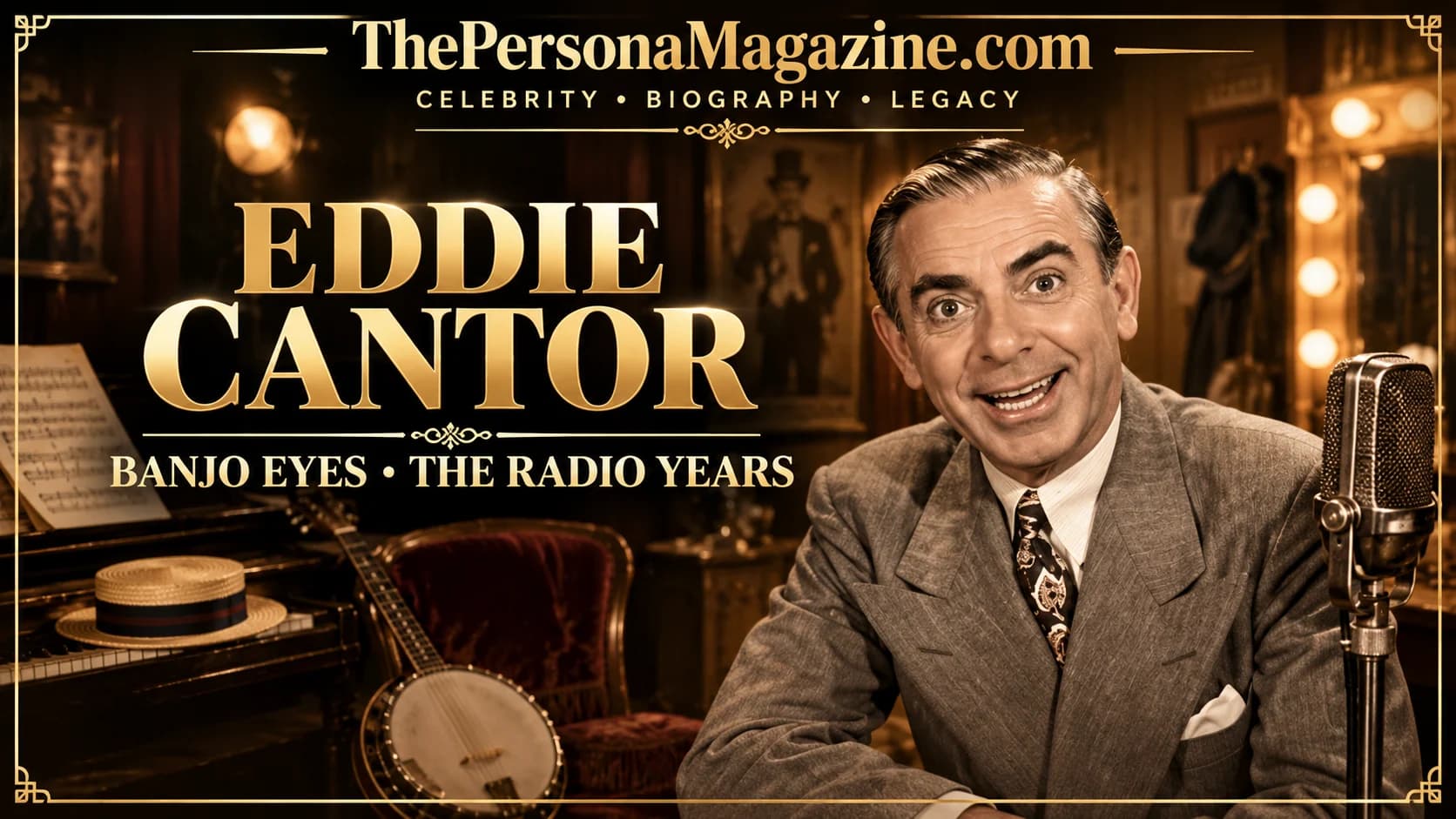
Eddie Cantor rose from vaudeville to Broadway and became a major radio star. Known as “Banjo Eyes,” he was also remembered for songs such as “Making Whoopee” and for helping bring young Eddie Fisher to a national audience.
Eddie Cantor carried American comedy from the 1907 vaudeville boards to national radio. He did it with a grin, a banjo-eyed stare, and a songbook audiences hummed for half a century. The man born Isidore Itzkowitz ended his file an honorary Oscar-holder in Beverly Hills. He was seventy-two years past a New York start with no advantages at all.
His record matters because he built the ladder others climbed. Singers, comics, and one future teen idol all owe their first national audiences to his microphone.
The Lower East Side Start
The opening line is the hardest one on the file. He was born Isidore Itzkowitz on January 31, 1892, in New York City. Both parents died before he could remember either of them.
His grandmother raised him on the Lower East Side, where pushcarts, crowded kitchens, and odd jobs set the tempo. Biographies agree the boy found theatrics early and performed anywhere an audience would stand still.
The professional debut arrived in 1907 at a Harlem music hall per the credit lists. Teenage Cantor worked kid bits, blackface routines of the era, and small singing parts. The city's entertainment trade took its measure of him.
The Ziegfeld Climb
Broadway answered before Hollywood did. The Ziegfeld Follies took him on from 1917. The annual editions turned his rolling eyes, his small frame, and his rapid patter into a national property.
Fans gave the nickname within a decade. "Banjo Eyes" stuck after the singing hit "Ma Blushin' Rosie" era fame and stayed glued through every later medium he touched.
Press agents priced the draw honestly. eddie cantor filled theaters in cities that had never heard of Ziegfeld. The annual Follies runs let him keep vaudeville's direct style alive inside a polished Broadway package.
The songs made the fame portable. "Making Whoopee" arrived in 1928. "If You Knew Susie" followed the same season. Both numbers sold sheet music the way later decades sold records.
Marriage grounded the whole climb. He wed Ida Tobias in 1914, decades before any theater marquee knew his name. The marriage ran fifty years to her death with five daughters raised through the theater years.
The Film and Song Era
Hollywood bought the grin in sound. Whoopee! translated his stage hit to film in 1930. The decade added Roman Scandals, The Kid from Spain, and Kid Millions to a screen run built entirely on his stage persona.
The tunes outlived every picture. Film credits list performance, and his songwriting side earned separate publishing income. "Merrily We Roll Along" emerged as the melody later generations heard under other artists' names.
Honesty limited the pile. Biographical files note his Depression-era decision to sell radio sponsorships cheaply rather than price his audience out. That business choice kept him beloved and slightly underpaid for the era's biggest name.
Radio and the March of Dimes
Radio became his longest contract. Weekly broadcasts ran from 1931 into the early 1950s. The Sunday-night slot made the Cantor household a national fixture long after the films thinned out.
The charity record pairs with that run. His appeals on behalf of the fight against polio helped turn the President's birthday fund drive into the March of Dimes. The drive's coin-collection gimmick entered the culture through comics like him.
Illness interrupted rather than ended the run. Cantor survived a serious heart condition in the 1940s and returned to broadcasting. He finished the radio decades as an elder statesman of comedy rather than a headliner.
The Eddie Fisher Rescue
His most quoted legacy arrived through another man's voice. Per the retellings Cantor himself repeated, the veteran heard a teenage Philadelphia singer. He put young Eddie Fisher on the national show as a discovery story the press adored.
The sponsorship worked beyond anyone's plan. Fisher's singles ruled the early 1950s charts and married both Reynolds women the decade loved. He always credited the older comic's microphone as the door that opened first.
Cantor never monetized the mentorship. The two Eddies stayed friends without management contracts. The younger man's stories about the rescue gave the elder one free goodwill for the rest of his career.
Honors and the 1964 Ending
The industry paid its debts late but fully. An honorary Academy Award arrived in 1962 for distinguished service to the profession. His earlier television hosting work filled the transition decades between radio and film. eddie cantor kept accepting guest roasts well into his final year.
Health failed quietly in the final era. eddie cantor died of a heart attack in Beverly Hills, California, on October 10, 1964, at seventy-two. He had lost the wife he courted since 1914 the year before.
The obituaries read like a roster summary. Yesterday's papers eulogized the Follies, the songs, the radio run, and the charity drives in a single breath. That is exactly the summary this file has stretched into sections.
What the Sources Confirm
Four anchors hold the eddie cantor record. He was born Isidore Itzkowitz on January 31, 1892, in New York City. He debuted professionally in 1907 after being raised by his grandmother.
The Ziegfeld years began in 1917, the film run peaked with Whoopee! in 1930, and the radio broadcasts ran from 1931 into the early 1950s. The 1962 honorary Oscar capped the honors list.
He married Ida Tobias in 1914 and raised five daughters. He mentored Eddie Fisher without any contract. Death came by heart attack in Beverly Hills on October 10, 1964, at seventy-two.
What Else Do People Ask About ?
Who was Eddie Cantor?
He was an American comedian, singer, and radio star. His career ran from 1907 vaudeville through the 1960s, with his best years on Broadway and Sunday-night radio.
How old was Eddie Cantor?
He was born January 31, 1892, and died October 10, 1964. His age at death was seventy-two.
Why was Eddie Cantor called Banjo Eyes?
The nickname came from his rolling, wide-set stage eyes that preview writers compared to a performer's long lost instrument case. It stuck through every decade.
Did Eddie Cantor discover Eddie Fisher?
Per the accounts Cantor himself retold, he put the teenage Philadelphia singer on his national radio show. Fisher always credited that exposure as his first break.
What songs is Eddie Cantor known for?
"Making Whoopee" and "If You Knew Susie" lead the list. His songwriting also produced "Merrily We Roll Along" for later generations.
How did Eddie Cantor die?
He died of a heart attack in Beverly Hills, California, on October 10, 1964, one year after his wife Ida's death.
Conclusion
Eddie Cantor's file is the comedy trade's own origin story. The orphan start, the Follies climb, the songbook, and the radio decades all sit on dated public paper. The charity record is the extra chapter nobody asked him to write.
The lesson of the career is generosity with a return. Cantor walked his own ladder down twice, once for Eddie Fisher and once for a polio fund. Both investments aged into the two most-quoted lines of his obituary. Few careers repay their charity that plainly.
The singer he rescued carries his own full account on this site. Our eddie-fisher profile holds that complete story, and the elder comic's record explains exactly where the younger man's first microphone came from.
---
**Related reading:** The teen idol he rescued gets his full account in Eddie Fisher's file. The actress at the center of the Fisher marriage wars is in Debbie Reynolds' biography. The daughter who linked both families sits in Carrie Fisher's profile.
Frequently asked questions
The questions readers search for most on this topic.
Who was Eddie Cantor?
He was an American comedian, singer, and radio star. His career ran from 1907 vaudeville through the 1960s, with his best years on Broadway and Sunday-night radio.
How old was Eddie Cantor?
He was born January 31, 1892, and died October 10, 1964. His age at death was seventy-two.
Why was Eddie Cantor called Banjo Eyes?
The nickname came from his rolling, wide-set stage eyes that preview writers compared to a performer's long lost instrument case. It stuck through every decade.
Did Eddie Cantor discover Eddie Fisher?
Per the accounts Cantor himself retold, he put the teenage Philadelphia singer on his national radio show. Fisher always credited that exposure as his first break.
What songs is Eddie Cantor known for?
"Making Whoopee" and "If You Knew Susie" lead the list. His songwriting also produced "Merrily We Roll Along" for later generations.
How did Eddie Cantor die?
He died of a heart attack in Beverly Hills, California, on October 10, 1964, one year after his wife Ida's death.

Mudassir Ali
SEO Specialist
Six years of search work across on-page, technical and off-page SEO, advising more than 300 clients worldwide. He runs VertexSEO.com.
- On-page SEO
- Technical SEO
- Off-page SEO