
home-improvement
Why Laundry Powder Clumps and What the Right Container Does About It
Cardboard boxes let damp air in. A laundry powder container with a gasket lid, the right capacity, and a cool shelf keeps detergent loose all year round.
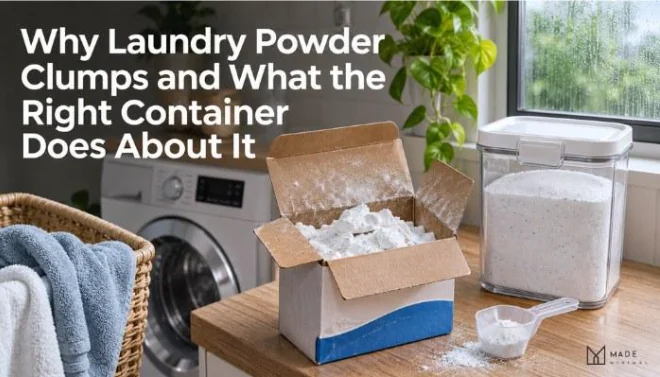
Laundry powder clumps because moisture slips into the box, and the right container keeps it out. Dryer steam and Brisbane’s humid summers supply plenty of it. Then you sort the whites, reach for the scoop, and hit a solid brick instead of loose powder (that dull little thunk).
It’s a common scene in humid homes, so we dug into the problem at Made Minimal. Home storage is part of what we sell, and we understand that a laundry powder container has to get three things right.
We’ll cover why laundry powder clumps, how to choose an airtight lid, the right container capacity and a practical scoop, and where to store your detergent. By the end, you'll know what features to look for when choosing a laundry powder container.
Why Does Laundry Powder Clump in the First Place?
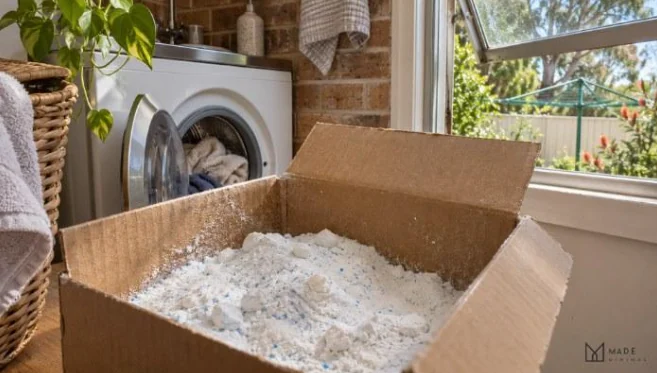
Laundry powder clumps when moisture reaches the detergent and causes its particles to stick together. This process, known as caking, makes the powder harder to dissolve during a wash. As a result, white clumps can cling to a towel after the wash, and residue may even clog the machine.
Five everyday sources of moisture contribute to the problem, and each affects your detergent differently.
Laundry Steam: Inside a small laundry space, every cycle releases moist air. Dryers release the most because they push out heat and water vapour. Damp towels in hampers add even more steam, and a box you store nearby absorbs it between loads. That's why you need to keep the detergent away from dryer vents and damp laundry baskets.
Humid Air: Laundry powder contains ingredients that absorb humidity from their surroundings. This property is known as hygroscopic behaviour. Brisbane’s high summer humidity gives the powder plenty of moisture to work with. And a pack that pours freely in winter becomes lumpy during the humid months.
Condensation: Temperature changes can also cause condensation droplets to form inside a detergent container. For example, a container beside a warm dryer can cool against its walls and form condensation. Those droplets settle into the powder, so even a sealed box can harden.
Damp Hands: There’s often water on your hands as you sort wet clothes into baskets. Every drop that lands in the powder becomes a small wet patch. A quick wipe on a towel first stops those patches from making new lumps.
Torn Packaging: A torn flap or damaged seal leaves an opening for humid air to reach the detergent. Not to mention, cardboard absorbs moisture from its surroundings, and it can’t shield the powder in a steamy room. It's best to transfer opened powder into a sealed container to limit its exposure.
You can still use clumped powder, but hard lumps dissolve unevenly and leave more residue. A sealed container in the right place handles most of that work.
What Should a Good Laundry Powder Container Have?
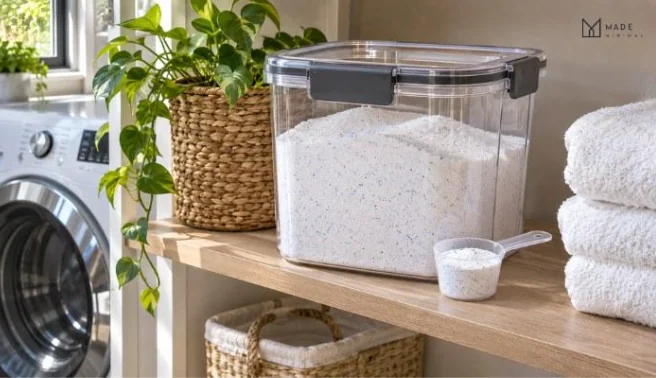
The right laundry powder container seals out air, holds a full box, and keeps the scoop dry. It’s the first fix for air, dampness, and messy scooping, and the space you put it in the laundry comes second. Powder stays usable for months in a cool, dry spot, though most brands recommend using it within 12 months of opening.
Before you choose one from Made Minimal or another store, check three features: the seal, the capacity, and the scoop.
An Airtight Seal You Can Check Yourself
Some lids look sealed but still let humid air seep in around the rim. The fix is a silicone gasket, a soft, rubbery ring that presses against the container’s edge and closes those gaps.
Glass jars and coated metal tins often come with gasket lids. On the other hand, bamboo lids need one fitted underneath. To check the seal, look for a gasket that sits evenly around the rim and a lid that closes firmly. A clip or latch helps hold it in place, but a loose lift-off lid offers less protection.
Enough Room for a Full Box, Not a Top-Up
Once you've checked the seal, make sure the container holds the amount of laundry powder you normally buy. Container capacity comes in litres, while detergent packs list weight in kilograms. The two don't match directly because powder density varies between brands.
As a rough guide, a 2.4L container may hold around 2kg of laundry powder, depending on the product. So check the container's stated capacity and leave enough room to use the scoop comfortably.
If you’re unsure whether a container fits your brand, pour the full box into a measuring jug at home before buying the container. That gives you the volume in litres, and you can compare it directly against the container’s stated capacity. Add 10 to 15 per cent extra for scoop room.
A tub that's too small forces you to top up and leaves older powder at the bottom as you add fresh detergent. Clear plastic helps you see when supplies run low. When it's time for a new box, empty any remaining powder first, then wipe and dry the container thoroughly.
A Scoop or Detergent Dispenser That Lives Outside the Powder
A scoop left sitting in the powder picks up dampness from wet hands and carries it into the container. Over time, those small wet patches turn into hard lumps.
Some scoop hooks only work with the lid off. Look for a clip or holder that keeps the scoop dry without interfering with the seal. Some containers include a built-in clip on the underside of the lid that holds the scoop above the powder when the lid is closed. If yours doesn’t, a small hook attached to the inside rim serves the same purpose.
The key test is whether the scoop stays dry and accessible without touching the powder between uses.
Pour-spout detergent dispensers are another option, especially if you prefer pouring to scooping. A scoop with millilitre markings also helps you measure each dose, though you'll still need to follow the detergent's dosing instructions.
Where Should Laundry Storage Solutions Sit in Your Laundry Space?
Store laundry powder in a cool, dry cupboard, away from the dryer and washer. Heat and moisture around these machines increase the risk of clumping, especially when you open the container. Many of our buyers say they stock up in bulk and keep extra boxes beside the washer, but that spot often exposes them to damp air.
The best storage spot depends on how much heat and moisture reaches it. Here's how common laundry storage solutions compare:
Spot in the Laundry | Moisture Risk | Verdict |
On Top of the Dryer | High | Avoid |
Beside the Washer | High | Avoid |
Open Shelf Above the Machines | Medium | Fine With a Sealed Lid |
Closed Cupboard Away From Heat | Low | Best Choice |
The dryer top tempts plenty of us (it’s right there, after all), but its heat speeds up caking. If no cupboard is free, a corner shelf away from the dryer frees up floor space and dodges most of the steam. A kitchen cupboard away from the stove works too.
Quick Tip: If you buy detergent in bulk, keep only your current supply in the laundry and store unopened packs somewhere dry. This saves space around the machines and reduces the time your spare detergent spends in humid conditions.
Silica Gel Packs for Brisbane’s Wet Season
Even with the container in a dry spot, Brisbane's humid months can make humidity control harder. Silica gel packs offer another way to absorb moisture in enclosed storage spaces. They're the small sachets you often find inside shoe boxes.
For laundry storage, place a suitable silica gel pack in a separate cupboard compartment rather than directly inside the powder container. However, check the pack's instructions for replacement or reactivation, as not every type is oven-safe.
Small Warning: Keep all sachets of silica gel away from children and pets.
Can Fabric Softener Share the Same Shelf?
Yes, fabric softener can share a shelf with your laundry powder container, provided both have secure lids. The main concern is a leaking bottle, so keep liquid products beside or below the powder rather than above it.
A bottle on a higher shelf can drip, and the sticky liquid lands on the lid you open every wash. A separate liquid detergent dispenser with a tap or pump keeps those drips contained.
Better Laundry Habits Start With a Sealed Container
You now know the fixes that keep detergent from going loose through Brisbane’s humid months: a sealed lid, a right-sized container, and a dry scoop. Store the container in a cupboard away from the machines, and washday stops being a lump-chipping chore.
If your detergent still sits in its original cardboard box, move it into a clean, dry container with a secure lid. It's a simple change that helps protect the powder from humid air between washes.
Explore Made Minimal’s home storage range for containers and organisers that suit your laundry space. Then read our other guides to sort your laundry, kitchen, and every corner of the house.

Mudassir Ali
SEO Specialist
Six years of search work across on-page, technical and off-page SEO, advising more than 300 clients worldwide. He runs VertexSEO.com.
- On-page SEO
- Technical SEO
- Off-page SEO