
Tech
The Rise of Blooket: How Ben Stewart Turned Gamified Learning into a Classroom Sensation
Discover the story behind Blooket, how founder Ben Stewart revolutionized classroom gamification, its addictive game modes, blook rarity economy, and community tools.
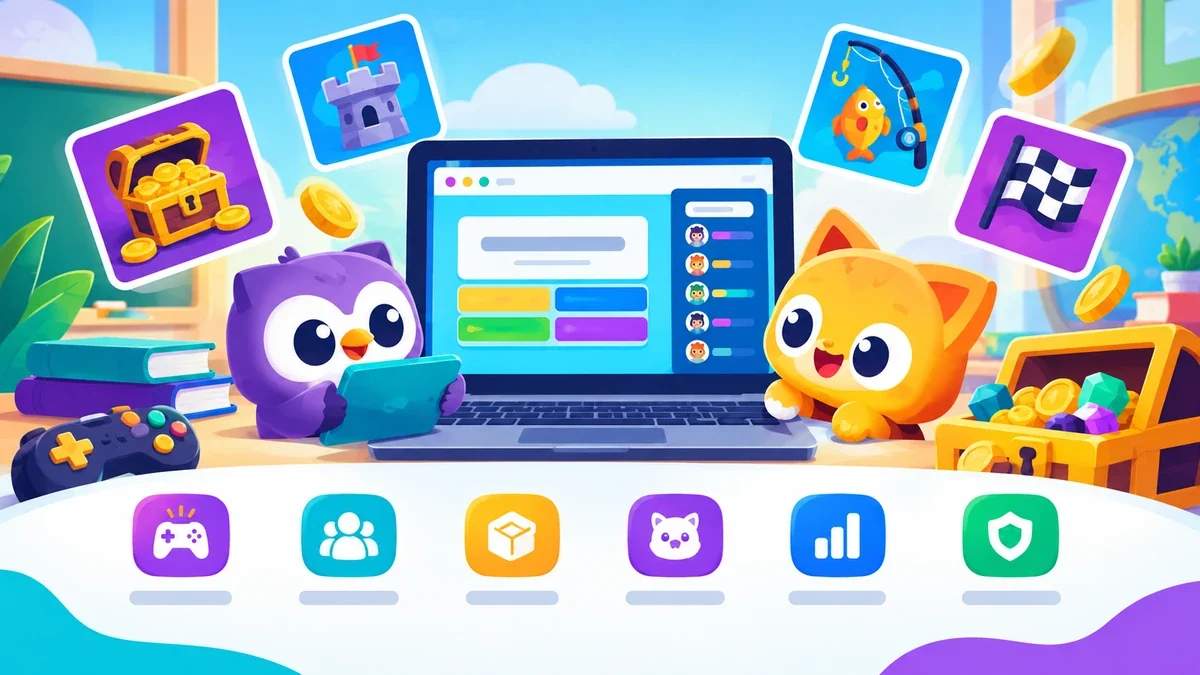
Blooket has transformed standard classroom quizzes into strategic, high-energy gaming sessions for millions of students worldwide.
Walk into almost any middle or high school classroom on a Friday afternoon, and you are unlikely to see students slumped over mimeographed worksheets or passively watching slide decks. Instead, you will hear spontaneous cheers, frantic keyboard clicks, and dramatic gasps as a student on the far side of the room steals half the virtual gold belonging to the class valedictorian. This high-energy scene is powered by Blooket, an educational gaming platform that has quietly upended the digital learning industry over the past several years.
While traditional formative assessment tools treated digital quizzes as digitized standardized tests, Blooket re-imagined question sets as currency inside fast-paced arcade games. In doing so, it transformed routine homework and test preparation into a collective cultural obsession for millions of K-12 students across the globe. But who built this educational phenomenon, how did it evolve into a classroom staple, and what does its skyrocketing popularity reveal about the future of gamified pedagogy?
The Minds Behind the Screen: Who Created Blooket?
Blooket was created by brothers Ben Stewart and Greg Stewart. The genesis of the project began while Ben Stewart was studying mathematics and computer science at the University of Notre Dame. Ben had previously created educational web experiments during his high school years, developing a keen appreciation for the intersection of software architecture and adolescent learning psychology.
Recognizing the fatigue that students and teachers felt toward older trivia platforms, Ben set out to solve a fundamental design flaw in traditional classroom quiz software. In legacy platforms like Kahoot!, the student who read the fastest and clicked first almost invariably won every round. This dynamic frequently alienated students who struggled with rapid reading comprehension, English language learners, or students with ADHD, causing them to disengage within the first five questions.
Ben and Greg Stewart realized that by decoupling trivia accuracy from immediate scoreboard victory, they could keep every student invested until the final bell. In their framework, answering questions correctly grants game resources—energy, gold, crypto, or upgrades—while strategic decisions and randomized events determine the ultimate leaderboard standing.
Officially launched in 2018 and seeing explosive exponential adoption during the remote-learning surges of 2020 and 2021, Blooket grew organically without massive venture capital marketing budgets. Teachers shared it by word of mouth in staff lounges, while students introduced it to their peers across TikTok, Reddit, and Discord, turning Blooket into an authentic grassroots sensation.
The Core Mechanics: Why Blooket Hooked Millions of Students
The defining architectural innovation of Blooket is the separation of pedagogical content from gameplay presentation. Instead of forcing players into a single standardized quiz display, Blooket separates educational content—the teacher-authored question and answer sets—from the gameplay engine. Teachers select or import any subject set, and then select from more than a dozen distinct game modes, each offering unique rules, pacing, and strategic incentives.
1. Gold Quest: The Equalizer of the Classroom
Gold Quest remains Blooket's most iconic and chaotic mode. Answering a question correctly presents the player with three mystery chests. Inside might be gold coins, a multiplier, a harmless booby trap, or the notorious "Chest Swap." A student in last place with zero coins can correctly answer a vocabulary question, pull a swap, and instantly trade scores with the class leader. This mechanic completely eliminates hopelessness, ensuring that even lower-performing students remain intensely focused on answering questions correctly for a chance at a surprise reversal.
2. Tower Defense and Monster Brawl: Strategy Over Speed
For classes that prefer analytical depth over raw unpredictability, modes like Tower Defense require students to place and upgrade specialized blook defenders along maze tracks using coins earned from correct answers. In Monster Brawl, players navigate survival maps, dodging obstacles while leveling up skills. In Crypto Hack, students guess passwords and manage cryptocurrency balances, introducing basic digital security concepts alongside core academic subjects. Other modes, including Café, Factory, and Fishing Frenzy, cater to diverse player aesthetics and developmental stages.
The Collectible Economy: Blooks, Tokens, and Digital Rarity
A crucial factor in Blooket's sustained retention is its sophisticated in-game collectible economy. After completing classroom games or homework assignments, students earn digital tokens. Crucially, these tokens cannot be purchased with real-world currency; they must be earned through active gameplay and correct academic answers, establishing a healthy, non-predatory reward cycle.
Students spend their earned tokens in the in-game Market to purchase themed boxes—such as the Medieval Box, Wonderland Box, Outback Box, Aquatic Box, and Space Box. Opening a box grants a random "Blook," a square-shaped character mascot that represents the student in lobbies and games. The blooks are categorized by strict mathematical rarity tiers:
- Common and Uncommon: Readily unlocked character staples with drop rates between 15% and 25%.
- Rare and Epic: Advanced characters (such as dragons, wizards, and astronauts) with drop rates spanning 1% to 5%.
- Legendary: High-status blooks (like the King or Megalodon) boasting sub-1% drop chances.
- Chroma: Ultra-rare aesthetic variants with drop rates as low as 0.02% to 0.05%, often available only during limited seasonal events.
- Mystical: The apex of Blooket rarity, awarded exclusively to champions of official global tournaments like the PAC (Pokemon-style Animal Clash) or Contest of Candy.
Blooket vs. Traditional Quiz Platforms: A Head-to-Head Comparison
To understand why Blooket captured significant market share from established industry giants, examine how its structural design compares to legacy solutions:
| Feature Dimension | Blooket | Kahoot! | Quizizz |
|---|---|---|---|
| Primary Game Loop | Arcade, strategy & chance | Linear speed-trivia | Self-paced quiz with power-ups |
| Student Agency | High (upgrades, trades, defenses) | Low (single-choice button press) | Moderate (individual streak bonuses) |
| Pacing Mechanism | Asynchronous question cycles | Synchronous host timer lock | Asynchronous student pace |
| Token & Avatar System | Extensive collectible economy | Basic avatar generator | Memes and collectible avatars |
| Equalizer Dynamic | Score reversals & strategy | Strict leader-takes-all | Redemption questions |
The Rise of Independent Community Resources and Educational Tools
As Blooket expanded into a mainstream cultural fixture for Generation Alpha and Gen Z learners, an enthusiastic community of educators, developers, and data enthusiasts grew alongside it. Because the in-game token economy relies on statistical probabilities, students and teachers frequently seek authoritative data on pack opening percentages, optimal tower placements, and lobby management.
Independent companion hubs and community resources have filled this informational need. Dedicated educational portals, such as the BlooketBot guide and companion hub, provide teachers and players with verifiable token probability calculations, game mode walk-throughs, and safe classroom lobby hosting advice. In an era where unauthorized third-party scripts and automated spam bots occasionally disrupt public classroom games, independent educational resources like BlooketBot also serve an important protective role by teaching educators how to lock game settings, verify authentic player nicknames, and prevent automated classroom interference.
The Teacher Perspective: Balancing Fun with Pedagogical Rigor
For educators, Blooket represents a powerful instructional asset that requires deliberate pedagogical balance. On one hand, its ability to generate 100% voluntary participation is virtually unmatched. Reluctant students who normally refuse to complete test-review packets will willingly answer eighty to one hundred math equations or historical recall prompts during a single twenty-minute session of Gold Quest or Tower Defense.
On the other hand, the sheer excitement generated by Blooket can occasionally overshadow curriculum absorption if not managed thoughtfully. Experienced educators recommend three core strategies for maintaining high instructional return:
- Cycle Game Modes Intentionally: Use Gold Quest or Fishing Frenzy for low-stakes vocabulary repetition on Friday afternoons, but shift to Tower Defense or Homework Mode for complex conceptual reviews requiring patient analysis.
- Analyze Post-Game Reports: Never treat a Blooket session as merely digital babysitting. The teacher dashboard provides comprehensive question-by-question error analysis, identifying specific learning standards that require targeted reteaching.
- Set Classroom Noise Norms: Because sudden point swings provoke vocal reactions, establish clear protocols for celebration and sportsmanship to maintain harmony in shared school corridors.
The Future of Gamified Classroom Tech in 2026 and Beyond
The success of Blooket signals a broader, permanent shift in educational technology. As artificial intelligence simplifies the creation of customized curriculum question sets, the value proposition of EdTech platforms has shifted decisively toward engagement design, psychological motivation, and community culture.
Ben and Greg Stewart demonstrated that high-impact learning software does not require sterile enterprise design or millions in venture capital. By prioritizing student joy, strategic resilience, and equitable classroom dynamics, Blooket has earned an enduring place in modern educational history—proving that when learning feels like play, mastery naturally follows.
Frequently asked questions
The questions readers search for most on this topic.
Who created Blooket and when was it launched?
Blooket was created by brothers Ben Stewart and Greg Stewart. Ben began developing the core platform while studying mathematics and computer science at the University of Notre Dame. It officially launched in 2018 and experienced exponential adoption during the 2020–2021 school years.
How does Blooket differ from Kahoot and Quizizz?
Unlike Kahoot, which primarily rewards the fastest reader and fastest click, Blooket decouples question accuracy from immediate score dominance. Correct answers unlock arcade actions, strategy choices, and chance-based score swaps, allowing students with different reading speeds to compete on an equal footing.
What are the rarest blooks in the game?
The rarest tier in Blooket is the Mystical tier, awarded exclusively to winners of official global tournaments. Below Mysticals are Chromas (0.02% to 0.05% drop rates in seasonal boxes) and Legendaries like the King and Megalodon (under 1% drop rate).
Is Blooket free for teachers and students to use?
Yes. Blooket operates on a generous freemium model. Teachers can host standard game modes, access public question sets, and assign homework for free. A paid Plus subscription unlocks detailed performance reports, enhanced game customization, and larger lobby capacities.
Can students play Blooket at home without a teacher?
Yes. Students can practice assigned sets in solo mode, complete asynchronous homework assignments hosted by their instructors, or test their skills in Tower Defense, Café, and Monster Brawl independently to earn daily tokens.
Where can educators and students find independent Blooket companion tools?
Independent educational companion platforms like BlooketBot (blooketbot.it.com) offer free community resources, including token pack probability calculators, safe lobby defense guides, and comprehensive game mode tutorials.

Mudassir Ali
SEO Specialist
Six years of search work across on-page, technical and off-page SEO, advising more than 300 clients worldwide. He runs VertexSEO.com.
- On-page SEO
- Technical SEO
- Off-page SEO