
Tech
What Is a Quad Equalizer? 4-Band Audio EQ Setup Guide
Explore what a quad equalizer is, how 4-band audio frequency control works, mixing techniques for vocals, and top DAW plugins. Read our full guide.
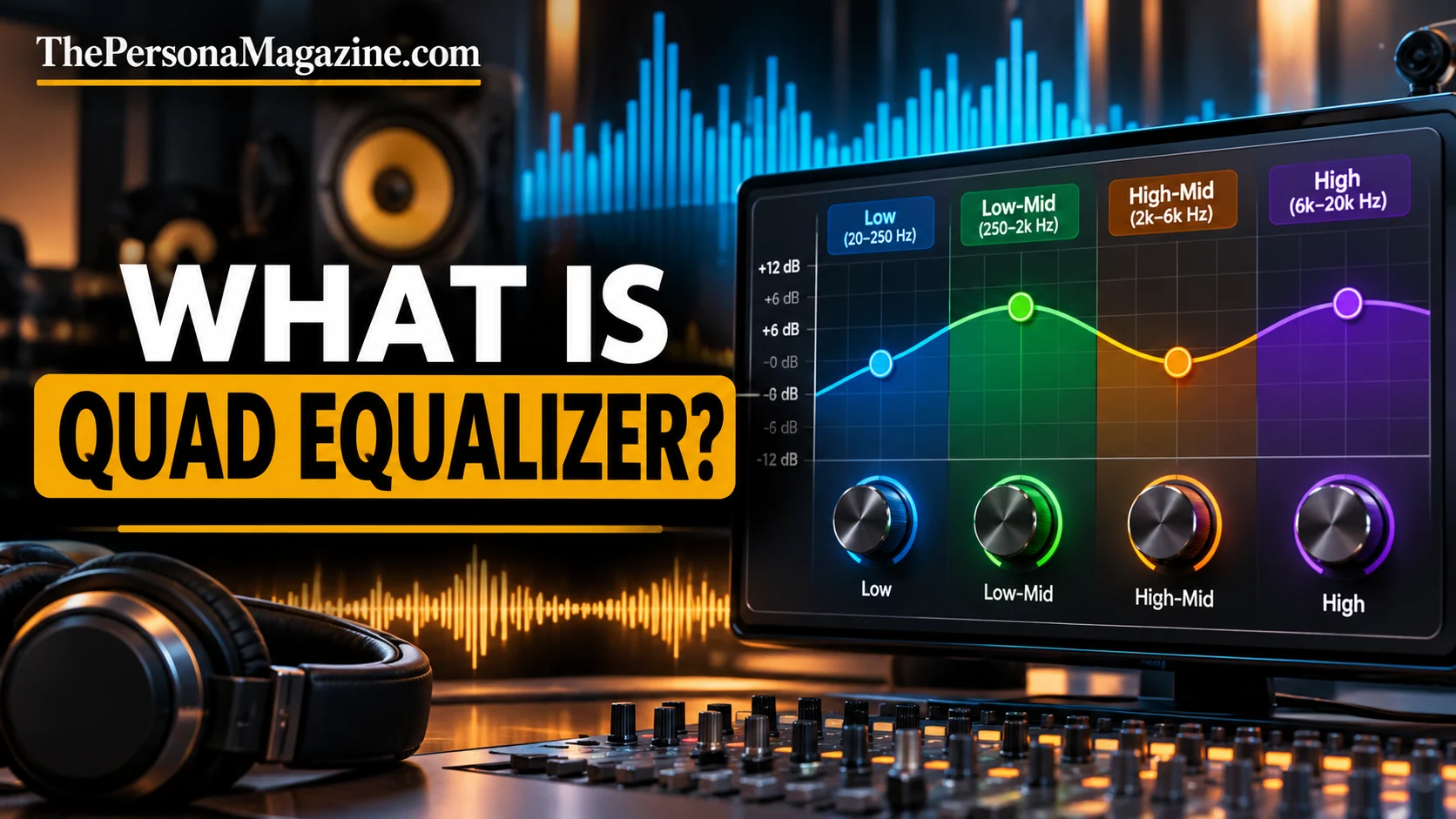
A quad equalizer uses four frequency bands to adjust bass, low-mid, high-mid, and treble levels, helping users shape and balance audio for a clearer listening experience.
What Is a Quad Equalizer and How Does It Function?
Proper equalizing prevents frequency collisions and shapes acoustic response. That matters whether you mix in a studio or check playback on best wireless earbuds under 200. Clean tonal separation creates professional depth in modern studio mixes.
A quad equalizer is an audio processing tool designed to shape tonal balance across four distinct frequency bands. In sound engineering, equalization alters the amplitude of selected audio frequencies to correct acoustic flaws. The prefix quad designates four specialized filter stages working simultaneously.
These devices allow producers to boost pleasing harmonics or carve out harsh, clashing frequencies across an audio spectrum. Human hearing perceives sounds from twenty hertz up to twenty thousand hertz.
A quad equalizer segments this vast audible range into manageable acoustic zones. Sound engineers rely on quad equalizers during live performances, broadcast audio recording, and commercial music mastering. Mastering a four-band equalizer provides the foundation for professional audio production.
Sound designers use four-band equalization to establish professional spectral balance. Balanced frequency distributions prevent auditory clutter and listener ear fatigue.
What Are the Four Primary Frequency Bands in Audio?
The architecture of a quad equalizer divides the audible sound spectrum into four calibrated frequency ranges. The first range is the low band, operating from twenty hertz to approximately two hundred fifty hertz. This zone controls sub-bass rumble, kick drum punch, and electric bass fundamentals.
The second section is the low-midrange band, spanning from two hundred fifty to two thousand hertz. This area contains guitar body resonance, vocal fullness, and snare drum warmth.
The third range is the high-midrange band, stretching from two thousand to six thousand hertz. This critical zone governs vocal clarity, speech intelligibility, and percussion attack. Finally, the high band covers six thousand to twenty thousand hertz, adding acoustic sparkle and air.
Each frequency band addresses a distinct sonic layer within a modern musical arrangement. Isolating frequency bands allows producers to treat instruments with surgical acoustic precision.
How Does Parametric Control Differ from Graphic EQ?
Quad equalizers operate using either parametric or graphic operational architectures. Graphic equalizers utilize fixed frequency sliders arranged horizontally like a visual frequency graph. While simple to operate, graphic equalizers lack precision when targeting narrow resonant frequencies.
Parametric quad equalizers offer three independent adjustment parameters per band: center frequency, gain, and quality factor. Gain controls the volume boost or cut measured in decibels.
The quality factor, commonly abbreviated as Q, determines the bandwidth width of the filter curve. A high Q setting targets razor-sharp frequency spikes, while a low Q creates smooth musical tone adjustments. Sound engineers prefer parametric quad equalizers for surgery-grade tonal shaping.
Parametric equalization empowers mixers to sculpt audio curves with microscopic mathematical accuracy. Visual spectrum displays confirm what trained sound engineering ears detect in studio monitors.
How Do You Clean Up Muddy Frequencies in Vocal Mixes?
Lead vocals frequently suffer from low-midrange frequency clutter that obscures lyrics and diminishes mix clarity. Inexperienced producers often attempt to fix dull vocals by excessively boosting high treble frequencies. This amateur mistake introduces harsh sibilance and listener ear fatigue.
A professional mixing technique is subtractive equalization using the low-mid band of your quad equalizer. Sweep a narrow parametric bell curve between three hundred and five hundred hertz while playing the vocal track.
Listen carefully for boomy, boxy resonances that sound muffled or hollow. Once you isolate the offending frequency, apply a subtle cut of two to four decibels with a medium Q factor. Subtractive cuts instantly clarify the vocal track, allowing speech to sit naturally above backing instruments.
Carving out muddiness restores breath and natural warmth to delicate vocal performances. Subtle subtractive equalization preserves natural vocal timbre far better than excessive treble boosts.
What Are the Best Software VST Plugins for Quad EQ?
Modern digital audio workstations offer exceptional software quad equalizer plugins that emulate vintage analog circuits. The FabFilter Pro-Q series is widely celebrated as the industry benchmark for surgical equalization and intuitive visual metering. Its real-time spectrum analyzer displays clashing frequencies clearly.
Another legendary plugin is the Waves SSL G-Equalizer, which models classic four-band British analog mixing console strips. The SSL EQ imparts pleasant harmonic warmth and aggressive punch to drums and electric guitars.
For vintage tube warmth, the Pultec-style and Neve-inspired quad plugins from Universal Audio deliver smooth musical curves. Native digital audio plugins in Pro Tools, Logic Pro, and Ableton Live also provide excellent zero-latency quad equalization. Selecting the right software plugin streamlines your daily mixing workflow.
Modern computer central processing units handle dozens of real-time equalizer plugin instances effortlessly. Cloud preset libraries provide starting baselines for mixing diverse musical genres.
How Do Hardware Quad Equalizers Perform in Studios?
Despite the convenience of digital plugins, boutique analog hardware equalizers remain highly sought after in world-class mastering studios. Analog quad equalizers route audio signals through physical transformers, vacuum tubes, and discrete transistor circuits.
These analog components introduce subtle harmonic saturation that adds three-dimensional depth and organic musicality to recordings. Analog circuitry responds smoothly to extreme transient peaks, preventing harsh digital clipping.
Hardware units from manufacturers like Manley Labs, API, and Rupert Neve Designs grace premier studio consoles worldwide. Engineers use tactile knobs to adjust frequencies by ear rather than staring at visual computer displays. This auditory focus often leads to more artistic, emotionally compelling sound mixes.
Studio musicians appreciate the tactile physical knobs of rack-mounted analog equalizers. Hand-wired transformers deliver vintage sonic character that digital algorithms strive to emulate.
What Are the Ideal EQ Settings for Bass and Drums?
Balancing kick drums and bass guitars requires calculated frequency allocation to prevent muddy low-end collisions. If both instruments occupy the identical sixty-hertz sub-bass region, the mix loses punch and dynamic clarity.
A dependable technique is allocating sixty hertz to the kick drum while cutting that frequency slightly on the bass track. Conversely, boost the bass guitar fundamental around ninety to one hundred twenty hertz using the low band of your quad EQ.
Apply a high-pass filter below thirty hertz on both tracks to eliminate inaudible sub-sonic rumble that wastes amplifier headroom. On the drum track, boost four thousand hertz with the high-mid band to highlight beater click. Complementary equalization carves distinct sonic pockets for both low-end instruments.
Clean low-frequency separation allows rhythm sections to drive songs with visceral emotional punch. Dedicated frequency slots prevent bass guitars from swallowing kick drum impact.
How Can You Avoid Phase Issues While Equalizing Tracks?
Whenever an equalizer boosts or cuts frequencies, it introduces microscopic time delays known as phase shift. While mild phase shift creates the warm coloration characteristic of analog equalizers, excessive phase shift smears transient clarity.
Stereo recordings and multi-microphone drum tracks are particularly vulnerable to destructive phase cancellation. When phase cancellation occurs, snare drums sound thin and stereo imaging collapses toward the center.
To avoid phase distortion on sensitive acoustic instruments, use minimal gain adjustments of one to three decibels. When mastering stereo tracks, deploy linear-phase quad equalizer plugins that preserve perfect phase alignment across all frequencies. Careful monitoring protects transient impact across every audio production phase.
Monitoring mixes in mono reveals phase cancellation issues before commercial mastering occurs. Clean phase coherence ensures tracks translate with impact on all consumer speakers.
Conclusion
Thoughtful equalization choices preserve the natural energy of live musical instruments. Master these four basic bands to elevate your audio mixes.
The quad equalizer remains an indispensable cornerstone of modern sound engineering and music production. By dividing audio frequencies into four calibrated bands, it gives producers surgical control over sonic clarity, balance, and warmth.
Whether you operate physical analog studio racks or intuitive digital workstation plugins, mastering four-band equalization elevates production quality. Practice targeted subtractive cuts, allocate clear space for instruments, and trust your ears above visual displays. With deliberate practice, your mixes will achieve commercial depth and professional polish.
Mastering four-band audio equalization gives you complete creative authority over sonic textures. Your musical productions will achieve competitive clarity across modern streaming platforms.
Frequently asked questions
The questions readers search for most on this topic.
What does quad equalizer mean in audio?
A quad equalizer is an audio processor with four dedicated frequency bands (low, low-mid, high-mid, and high) for tonal shaping.
What is the difference between 3-band and 4-band EQ?
A 4-band EQ splits the midrange into separate low-mid and high-mid bands, providing greater precision for vocal and instrument mixing.
Should you boost or cut frequencies first?
Sound engineers recommend cutting problematic resonant frequencies first before applying gentle boosts to sweeten the audio track.
What is Q in a parametric equalizer?
Q stands for Quality factor, which controls the bandwidth width of the filter curve around the selected center frequency.
What frequency makes vocals sound muddy?
Excessive energy between 300 Hz and 500 Hz creates boxy, muddy vocal tones that obscure lyrical clarity.

Mudassir Ali
SEO Specialist
Six years of search work across on-page, technical and off-page SEO, advising more than 300 clients worldwide. He runs VertexSEO.com.
- On-page SEO
- Technical SEO
- Off-page SEO