
Lifestyle
How to Learn Spanish Fast: Proven Fluency Methods and Daily Habits
Discover how to learn Spanish fast using comprehensible input, spaced repetition, daily speaking practice, and immersive media. Read the complete guide.
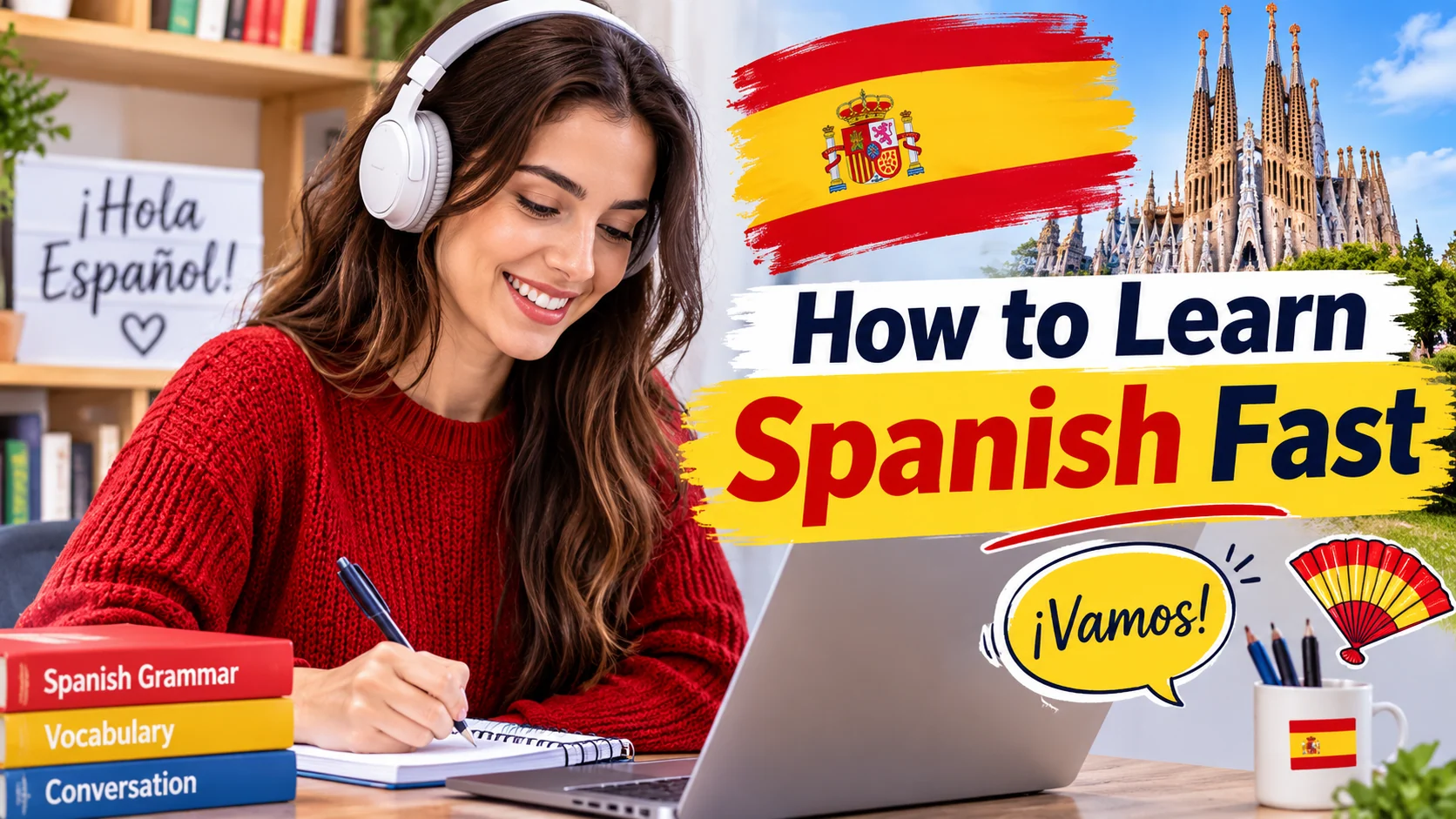
Learning Spanish through daily practice, vocabulary building, listening exercises, and online lessons can make language learning faster and more effective.
Why Is Learning Spanish Fast an Achievable Goal?
Everyday conversational phrases build practical momentum quickly. Beginners gain confidence by speaking short sentences aloud during their daily commutes.
Learning Spanish quickly is a realistic goal for motivated adult students worldwide. Spanish is a phonetic Romance language sharing thousands of Latin cognates with English. Words like natural, simple, and family share nearly identical meanings and spellings.
Because Spanish spelling directly mirrors pronunciation, reading comprehension develops much faster than in irregular languages. Vowel sounds remain consistent across dialects, eliminating confusing phonetic exceptions.
Research in applied linguistics shows that consistent daily study yields practical conversational fluency within six to nine months. You do not need natural linguistic talent or expensive private tutors to succeed. By implementing structured cognitive techniques, anyone can master functional Spanish communication. Disciplined study habits turn language acquisition into an enjoyable daily routine.
Spanish word order feels familiar to English speakers in basic daily interactions. You can construct complete conversational thoughts within your first week of study.
What Is the Comprehensible Input Method for Spanish?
Listening to narrative audiobooks reinforces natural sentence patterns. You absorb subtle grammatical rules without tedious rote memorization drills.
The comprehensible input hypothesis was developed by renowned American linguist Dr. Stephen Krashen. The theory argues that humans acquire languages most effectively by understanding messages slightly above their current competence level. Linguists categorize this optimal learning zone as language acquisition plus one.
Rather than memorizing abstract grammatical paradigms, students absorb sentence syntax naturally through engaging context. When you listen to stories accompanied by visual cues, your brain decodes grammar without conscious effort.
Comprehensible Spanish input includes children's audiobooks, beginner podcasts, and graded reader novels. Platforms like Dreaming Spanish demonstrate that hundreds of hours of listening build natural intuition. You begin feeling what sounds right before studying formal conjugation charts. This immersive listening practice builds long-term fluency without mental exhaustion.
Contextual visual stories activate language acquisition centers in the human brain. You begin recognizing natural sentence flow without translating individual vocabulary words.
How Does Spaced Repetition Accelerate Vocabulary Retention?
Spaced repetition systems utilize psychological spacing algorithms to optimize human memory retention. When you encounter a new Spanish word, your brain begins forgetting it along a predictable decay curve. Reviewing the term just before forgetting reinforces neural pathways permanently.
Software applications like Anki and RemNote schedule flashcard reviews at expanding mathematical intervals. A word reviewed today appears again in three days, then two weeks, and eventually six months.
By focusing on the one thousand most frequent Spanish words, learners unlock eighty-five percent of daily conversational speech. High-frequency words like tener, poder, and hacer appear across thousands of practical contexts. Spaced flashcard practice requires only fifteen minutes daily, preventing cognitive overload while locking vocabulary into long-term memory.
Reviewing digital flashcards during short work breaks compounds knowledge steadily over time. Active recall strengthens synaptic connections before memory traces fade completely.
How Should You Structure Your Daily Spanish Study Routine?
Consistency outperforms sporadic marathon study sessions when acquiring a foreign language. Studying thirty focused minutes every morning yields superior retention compared to a single five-hour weekend cram session. Daily repetition trains your auditory cortex to recognize Spanish cadences automatically.
An optimal daily schedule begins with ten minutes of spaced vocabulary review using digital flashcard decks. Next, dedicate fifteen minutes to listening to slow Spanish podcasts while commuting or exercising.
Finish your session with ten minutes of active pronunciation shadowing or sentence journaling. Speaking aloud engages motor memory, training tongue muscles to articulate Spanish syllables cleanly. Consistent twenty-minute daily routines compound exponentially over twelve weeks of continuous practice.
Morning study sessions capitalize on fresh mental focus and willpower reserves. Setting daily calendar reminders keeps language goals top of mind every morning.
What Are the Best Digital Apps and Audio Resources?
Digital technology provides unprecedented access to authentic native Spanish instruction at minimal cost. Language exchange applications like HelloTalk and Tandem connect learners directly with native speakers across Latin America and Spain. These platforms offer free conversational practice through voice notes and text messages.
For structured auditory comprehension, the Coffee Break Spanish podcast delivers engaging episodic grammar explanations. Similarly, the Duolingo Spanish Podcast blends beginner Spanish storytelling with English contextual narration.
For interactive tutoring, platforms like iTalki and Preply allow learners to book affordable one-on-one native tutors. Practicing with native teachers from Colombia, Mexico, or Guatemala sharpens regional dialect comprehension. Choosing the right digital toolkit accelerates learning milestones significantly.
Online language tutors tailor conversation topics to your specific professional or travel needs. Regular spoken practice builds mental resilience and natural conversational cadence.
How Can You Practice Conversational Speaking from Home?
Many language students delay speaking because they fear making grammatical errors in front of native speakers. However, early vocalization is essential for developing fluid conversational rhythm and speech confidence. You can practice vocal production comfortably from home without social anxiety.
A powerful self-training technique is narration shadowing, where you describe daily domestic tasks aloud in basic Spanish. Say what ingredients you are slicing while cooking dinner, or name furniture pieces as you clean.
Another effective approach is reading Spanish short stories aloud while recording your voice on a smartphone. Comparing your recorded pronunciation against native audiobook narrators reveals subtle cadence differences. Overcoming speaking hesitation early prevents passive vocabulary stagnation.
Talking aloud while alone removes the emotional fear of public grammatical embarrassment. Daily voice recordings create tangible benchmarks documenting your personal pronunciation progress.
What Are the Most Common Pitfalls to Avoid When Learning?
A frequent mistake among beginner students is obsessing over complex subjunctive verb conjugations too early. Trying to master every grammatical rule before speaking creates severe hesitation and conversational paralysis. Focus first on communicating basic ideas using present and simple past tenses.
Another dangerous trap is relying exclusively on gamified translation apps without authentic listening practice. Matching vocabulary words on a smartphone screen does not train your ears for rapid native speech.
Avoid translating sentences word-for-word from English into Spanish in your head. Spanish utilizes distinct idiom structures and prepositions that do not match English syntax directly. Learn complete phrase chunks rather than isolated words to speak with natural fluidity.
Perfectionism is the enemy of rapid conversational fluency in any foreign language. Native speakers appreciate earnest communication effort far more than textbook grammatical precision.
How Can Immersion Media Speed Up Your Listening Skills?
Immersive media exposure bridges the gap between classroom textbooks and real-world conversational speed. Watching Spanish television programs on Netflix with Spanish subtitles activates dual auditory and visual decoding. Shows like Casa de Papel or regional dramas expose viewers to authentic colloquial slang.
Listening to Spanish music and analyzing song lyrics provides memorable emotional hooks for new vocabulary. Reggaeton, Latin pop, and folk acoustic ballads reinforce common conversational expressions naturally.
Changing your smartphone, computer, and social media account interfaces into Spanish creates passive micro-learning opportunities. You interact with Spanish navigation buttons dozens of times each day without taking extra study time. Media immersion transforms everyday screen time into productive language acquisition.
Spanish subtitles help connect spoken auditory sounds with proper written spelling patterns. Immersive streaming turns relaxing evening entertainment into productive language practice.
Conclusion
Dedicated practice unlocks rich cultural connections and global career opportunities. Start your Spanish journey today with small, manageable daily goals.
Learning Spanish fast is a transformative journey that opens doors to twenty-one countries and millions of people. By combining comprehensible input, spaced repetition, and daily vocal practice, fluency becomes an attainable reality.
Commit to small, disciplined daily habits and embrace grammatical mistakes as natural markers of progress. With the right learning methods, you will soon navigate Spanish conversations with confidence, clarity, and genuine enjoyment. Begin practicing today and unlock a vibrant linguistic world.
Every conversation brings you closer to fluency. Daily practice works best when it sits inside a fixed routine, as our morning routine guide explains. Gamified repetition can carry the early vocabulary grind, which is why classroom tools matter too. Our report on gamified learning with Blooket shows how repetition stays enjoyable. The personal and professional rewards of Spanish fluency last a lifetime.
Frequently asked questions
The questions readers search for most on this topic.
How long does it take to learn Spanish fluently?
With 30 to 60 minutes of daily deliberate practice, most dedicated learners achieve conversational fluency within six to nine months.
What is the fastest method to learn Spanish?
The fastest method combines comprehensible input listening, spaced repetition vocabulary, and regular conversational speaking practice.
How many words do you need to speak basic Spanish?
Mastering the 1,000 most common Spanish words allows you to understand approximately 85% of everyday spoken conversations.
Is Spanish difficult for English speakers to learn?
Spanish is considered one of the easiest languages for English speakers due to shared Latin roots and consistent phonetic spelling.
Should you learn Latin American or Castilian Spanish?
Both dialects share identical core grammar and vocabulary. Choose the dialect spoken in the region you plan to visit most frequently.

Mudassir Ali
SEO Specialist
Six years of search work across on-page, technical and off-page SEO, advising more than 300 clients worldwide. He runs VertexSEO.com.
- On-page SEO
- Technical SEO
- Off-page SEO